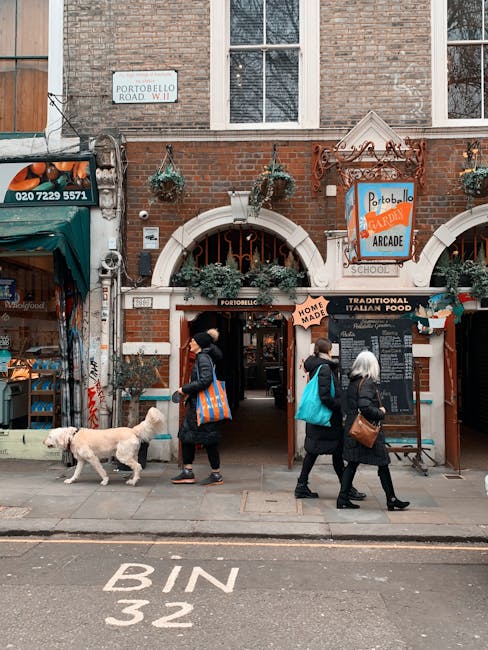
Portobello Road removals market day planning tips

If you are moving anywhere near Portobello Road, market day can turn a straightforward removal into a bit of a puzzle. Lorries, pedestrians, stalls, tight kerb space, delivery windows, and that constant stop-start rhythm all change the way a move needs to be planned. The good news? With the right Portobello Road removals market day planning tips, you can keep the day calm, protect your belongings, and avoid the kind of small delays that snowball into a long, tiring afternoon.
This guide walks through what makes market day different, how to plan around it, and which moving choices work best in real life. Whether you are arranging a flat move, clearing a studio, or shifting a few large items, the aim is the same: fewer surprises, less waiting around, and a smoother handover. Let's make it practical.
Why Portobello Road removals market day planning tips Matters
Portobello Road is lively on a normal day. On market day, it becomes a different animal altogether. Foot traffic increases, loading space becomes more competitive, and the road feels narrower because of the constant movement of people, stalls, traders, and vehicles trying to do their jobs at the same time. For removals, that means timing matters far more than people often expect.
A move that would be easy on a quiet side street can become awkward fast if the van cannot pause safely, if access is partly blocked, or if the team has to carry items further than planned. Even a simple sofa can become a headache if you have to weave it past busy stall areas or wait for a better gap in traffic. Truth be told, it is often not the lifting that causes the stress. It is the access.
That is why market day planning is less about perfection and more about reducing friction. Good planning helps you avoid rushed decisions, parking penalties, damaged furniture, annoyed neighbours, and that lovely London feeling of everyone being in a hurry at the same time. If you are handling a whole-home move, it can also help you decide whether a larger vehicle or a smaller man and van service is the smarter option for the route and the access conditions.
Expert takeaway: On Portobello Road, a move succeeds or struggles based on access, timing, and load-handling discipline. Plan those three pieces first, and everything else gets easier.
How Portobello Road removals market day planning tips Works
The basic idea is simple: you build your moving plan around the busiest parts of the area, not around the ideal version of the day in your head. That means treating market activity as a central factor rather than a minor inconvenience. To be fair, that is what makes the difference between a move that feels controlled and one that feels improvised.
In practical terms, the process usually works like this:
- Map the access points for both your pickup and drop-off locations.
- Identify the market day pattern around your exact stretch of road, including likely crowd pressure and vehicle movement.
- Choose the right vehicle size so you are not forcing a large truck into a space that needs quicker loading.
- Pack and label in a way that reduces dwell time at the kerb.
- Schedule the move for the quietest workable window.
- Prepare a fallback plan in case loading takes longer than expected.
That last point is underrated. What happens if the van cannot stop directly outside for ten minutes? What if a stall setup changes your usual access route? You do not need a dramatic contingency plan, just a sensible one: alternative parking options, a few extra hands if needed, and the flexibility to shift from curb-to-flat loading into a quicker staged handover.
For larger or more complex moves, it can make sense to compare vehicle and labour options early. Some customers prefer a moving truck for heavier loads, while others do better with a lighter team and quicker stop-start handling. The right method is the one that fits the street, the property, and the clock. Not the one that sounds best in theory.
Key Benefits and Practical Advantages
When you plan properly for a Portobello Road market day move, the benefits show up in small but very real ways. You do not just save time. You reduce the number of decisions you have to make under pressure.
- Less waiting: You avoid sitting in a van while the team searches for a place to stop.
- Lower damage risk: Careful access planning means fewer awkward turns, less bumping, and fewer emergency lifts.
- Better time control: You can predict the move more accurately and avoid overruns.
- Cleaner coordination: Everyone knows where to go, what goes first, and what needs extra care.
- Less stress for neighbours and traders: A neat, efficient move is simply easier for everyone around you.
- Smarter cost management: Efficient loading and fewer delays can make labour and vehicle time work better for you.
There is another benefit that gets overlooked: confidence. Once you know the route, the order of loading, and the likely pressure points, the day stops feeling mysterious. You start the move already one step ahead. That matters, especially if you are moving out of a busy flat where the front door opens straight onto a lively street and there is nowhere to stand around making decisions.
If you are moving home, pairing good planning with a dependable home moves service can make the whole experience feel much more manageable. For heavier household jobs, a house removalists team may be the better fit because the moving approach is built around scale and care, not just speed.
Who This Is For and When It Makes Sense
This kind of planning is useful for anyone moving in or around the Portobello Road area, but it is especially valuable if your move involves market day access, limited parking, or awkward property layouts. Not every move needs the same level of preparation, of course. A single suitcase and a chair are one thing. A full flat with white goods and fragile items is another story entirely.
You will probably benefit most if you are:
- moving from a flat above shops or near the market stretch
- trying to time a move around a busy Saturday or other high-footfall day
- working with limited lift access or narrow stairs
- relocating bulky furniture, antiques, or fragile household items
- managing a same-day handover with keys, cleaners, or landlords
- trying to avoid multiple trips because the property has awkward access
It also makes sense if you are running a business move in the area. A small studio, showroom, or office move can be surprisingly affected by market-day congestion, especially if equipment must be loaded in a tight window. In those cases, a planned commercial approach can be more efficient than trying to improvise on the spot. If that sounds familiar, you may want to look at commercial moves or office relocation services depending on what you are moving.
And if you only need one or two items taken away, smaller-scale support can be enough. A short run for a table, wardrobe, or second-hand chair may be better handled through furniture pick up rather than a full removal setup. Simpler, cheaper, less fuss. Sometimes that is exactly the right answer.
Step-by-Step Guidance
Here is a practical way to plan a market day removal near Portobello Road without overcomplicating it.
1. Start with the street, not the packing
Before you fill boxes, work out how the vehicle will actually access the property. Check the loading side of the street, likely foot traffic, and whether the building entrance needs a shorter or longer carry. If you ignore the street layout, your boxes can be beautifully packed and still land in a mess at the kerb. Happens all the time.
2. Pick the best time window you can realistically get
Earlier is usually safer than later, but the exact best time depends on your property, the market rhythm, and any building restrictions. If you have to move on market day, avoid making the move coincide with peak pedestrian movement if there is any flexibility at all. A 30-minute shift can sometimes make a big difference.
3. Reduce the amount of handling at the front door
Pack room by room, label clearly, and set aside anything that should travel last. The goal is to keep the loading sequence moving smoothly. If the removal team spends ages deciding what belongs where, you lose time in the noisiest, busiest part of the day.
4. Protect fragile and awkward items properly
Picture a mirror, a lamp, and a drawer unit being carried through a crowded street while someone tries to squeeze past with shopping bags. Not ideal, right? Use proper wrapping, tie loose parts, and keep fragile items easy to identify. Delicate items deserve the extra five minutes.
5. Decide whether one vehicle or two trips makes more sense
On a compact route, a smaller vehicle with faster loading can sometimes outperform a larger truck that struggles with access. For some customers, a flexible man with van arrangement gives the right balance of capacity and agility. For larger or more complex loads, a dedicated removal truck hire option may be better if the property and access can support it.
6. Build in buffer time
Market day moves rarely run exactly to the minute. A little buffer helps absorb the small setbacks: a blocked pavement, a delayed key handover, a slower lift, a neighbour asking for a quick pause. Those things are normal. Annoying, yes. Normal, also yes.
7. Keep essentials separate
Put keys, chargers, documents, medication, snacks, and a change of clothes in one easy-to-reach bag. You do not want to be hunting through taped boxes when the day is already noisy and your kettle is somewhere under a stack of labels.
Expert Tips for Better Results
There are a few small details that experienced movers tend to respect because they save time and reduce hassle. These are not glamorous tips. They just work.
- Keep the first load simple. Start with the easiest items so the team can establish a rhythm before handling the awkward pieces.
- Use fewer, sturdier boxes. Overpacked boxes slow everything down and are harder to carry safely through tight spaces.
- Stage items close to the exit. If permitted, place packed items near the door in advance so loading is more efficient.
- Communicate any access quirks early. Narrow hallway? Shared entrance? Loading restriction? Say it upfront.
- Protect the corners. Corners get knocked. Always. A little extra wrapping there can save a lot of grief.
- Think in zones. Separate the move into pickup, vehicle loading, transit, and unload. That makes the day easier to manage mentally.
A small human truth: the best moving days are usually the boring ones. Nothing dramatic, nothing clever, just steady work, clear communication, and a van that leaves on time. You want boring. Boring is good.
For service-based moves, especially where timing is tight, packing support can be worth it. A professional packing and unpacking services option can help if you need fragile items wrapped properly or if you simply do not have the hours to do it yourself. It is one less thing to juggle, and on a market day move, that matters.
Common Mistakes to Avoid
Most problems on market day come from a few predictable mistakes. Avoid these and you are already ahead of the pack.
- Assuming access will be easy. It usually is not, at least not for long.
- Packing too late. Last-minute packing slows the whole move and makes damage more likely.
- Choosing the wrong vehicle size. Too big can be as awkward as too small.
- Ignoring building constraints. Stairs, lifts, shared doors, and concierge rules all affect timing.
- Forgetting the weather. Rain changes loading speed and makes cardboard weaker. A damp Saturday has a way of exposing every weak box on the trolley.
- Leaving valuables mixed in with general boxes. Keep important items separate and obvious.
- Not telling the movers about fragile or oversized furniture. If the team has to improvise at the door, that is when people start muttering under their breath.
Another common one: underestimating how long the final clean-up takes. Even if the van loading goes well, the last ten percent of a move can still drag if rubbish, loose fittings, or forgotten items are left behind. Be fair to your future self and do a final walk-through.
Tools, Resources and Recommendations
You do not need fancy equipment, but a few basic tools make market day removals much smoother.
- Strong boxes and tape: Use sturdy packing materials that can cope with repeated carrying.
- Labels and markers: Clear labels save time at both ends of the move.
- Protective wraps and blankets: Ideal for furniture edges, mirrors, and delicate surfaces.
- Dolly or sack truck: Helpful for heavier loads if the access route allows it.
- Reusable bags: Great for cables, soft items, and last-minute loose bits.
- Floor and doorway protection: Worth considering if the property has polished floors or tight thresholds.
If you are unsure which move type suits your situation, start with the basics and choose the service that matches the scale of the job. A smaller local move may only need a simple vehicle and a couple of hands. A larger house move might benefit from a more structured team. And if your job is mostly a single item or two, there is no shame in keeping it lean.
For homeowners or tenants planning a bigger relocation, the wider home moves and house removalists pages can help you understand the kinds of support that are available. The point is not to overbuy services. The point is to match the service to the street and the load.
Law, Compliance, Standards, or Best Practice
Any move in a busy London street should respect basic road safety, access, and considerate working practices. That sounds obvious, but on crowded market days it is easy to rush and forget that kerbside loading still needs to be done safely and without causing unnecessary obstruction.
Best practice usually means:
- loading and unloading in a way that keeps pedestrians safe
- avoiding blocked entrances, driveways, and emergency access points
- following any building rules or management instructions
- using appropriate lifting and carrying techniques
- checking any parking or waiting restrictions before the day
- keeping noise and disruption as low as reasonably possible
If you are moving business stock or office contents, you should also think about document handling, data security, and insured transport arrangements where relevant. That is especially important for screens, files, and equipment that cannot just be stacked into a box and hoped for. A proper commercial or office move should feel controlled, not improvised.
In general, the safest mindset is simple: plan as if the street will be busy, the carry will be longer than you hoped, and the weather might turn. If it turns out easier than that, brilliant. But don't bank on it.
Options, Methods, or Comparison Table
Choosing the right removal method depends on how much you are moving, how tight the access is, and how much time you have. Here is a straightforward comparison.
| Option | Best for | Strengths | Watch-outs |
|---|---|---|---|
| Man and van | Smaller flats, light household moves, flexible scheduling | Quick to deploy, often easier on narrow streets, good for short jobs | Limited capacity if you have bulky furniture or lots of boxes |
| Moving truck | Larger loads, fuller house moves, mixed furniture and boxes | Higher capacity, fewer trips, suitable for bigger relocations | Can be harder to position on busy market days |
| Removal truck hire | Moves that need a dedicated vehicle without full-service handling | Useful when you want vehicle space and control over loading | Still needs careful route and parking planning |
| Packing and moving support | Fragile items, time-pressed moves, nervous first-time movers | Less stress, better protection, faster loading | Extra planning needed to coordinate timing |
There is no one "best" choice for every Portobello Road move. The smarter question is: which option is least likely to be disrupted by the road conditions on your date? For some people that will be a light and agile setup. For others, it will be a larger team with stronger packing support. Depends on the day. Depends on the load.
Case Study or Real-World Example
Here is a realistic scenario. A tenant is moving out of a two-bedroom flat near Portobello Road on a market day morning. The property is above street level, the staircase is narrow, and there are a few larger items: a bed frame, a dining table, several mirrors, and a boxed kitchen.
Instead of trying to do everything in one rush, the move is split into clear stages. Fragile items are packed the night before. The first load is made up of lighter boxes and soft furnishings. The table and bed frame are wrapped and set aside for later. The moving team arrives with a vehicle that fits the access better than a larger truck would have. The route to the entrance is checked in advance, and the handover timing is arranged to avoid the busiest part of the market flow.
What made it work? Not luck. Just boring, careful planning.
There was still some waiting. There always is. But because the team knew what to expect, nothing felt chaotic. No one was rushing through a narrow doorway with a sofa and a worried look on their face. That, in a move like this, is a win.
Practical Checklist
Use this checklist the day before and again on moving morning.
- Confirm the exact pickup and drop-off addresses
- Check market day timing and likely access pressure
- Choose the right vehicle or service type
- Pack fragile items securely and label them clearly
- Keep essentials in a separate bag
- Make sure keys, permits, and contact details are ready
- Clear hallways and doorways where possible
- Protect furniture corners and surfaces
- Plan for parking, loading, and a possible backup spot
- Walk through the property before leaving
- Set aside anything that should not go on the van
- Keep water, snacks, and a charger within reach
If you are moving with a partner, roommate, or landlord contact, assign simple roles in advance. One person answers the door, one keeps track of the checklist, and one deals with last-minute questions. It sounds basic. It is basic. That is why it works.
For more general information about the company behind these services, you can also read the about us page. And if you are ready to discuss a move, the simplest next step is to use the contact us page to ask about availability and the best service fit for your date.
Conclusion
Portobello Road removals market day planning tips are really about one thing: respecting the rhythm of the street. Once you accept that market-day access changes the job, you can plan around it instead of fighting it. That means better timing, a more suitable vehicle, clearer packing, and a calmer day overall.
Whether you are moving a full home, a few pieces of furniture, or a business load, the winning formula is the same: prepare early, keep the plan simple, and leave yourself a little room for the unexpected. Because on a busy London street, the unexpected is not rare. It is part of the scenery.
Get a free quote today and see how much you can save.
And if the day feels a bit much at first, that is normal. A well-planned move can still feel busy, but it should not feel impossible. Take it one step at a time, and the street gets quieter in your head.
Frequently Asked Questions
Can you move house on Portobello Road during market day?
Yes, but it usually needs more careful planning than a move on a quiet street. The main issues are access, pedestrian traffic, and loading space. If you can choose the timing, try to avoid the busiest windows and make sure the moving plan fits the street rather than the other way around.
What is the best time for a removals job near Portobello Road?
There is no single perfect time for every property, but earlier slots are often easier to manage than later ones. The best time depends on your exact address, how busy the market is expected to be, and whether you need to load directly outside or work from a nearby point.
Is a man and van service enough for a market day move?
For small or medium moves, it often can be. A man and van service is usually a good fit where access is tight and the load is manageable. For bigger homes or heavier furniture, you may need something larger.
Should I choose a moving truck or a smaller vehicle?
It depends on how much you are moving and how easy it is to stop near the property. A larger vehicle can reduce trips, but on a busy market day it may be harder to position. A smaller vehicle can be more flexible. The right choice is the one that fits the street conditions without slowing the move down.
How do I stop my furniture getting damaged during a busy move?
Wrap edges, protect corners, secure loose parts, and label fragile pieces clearly. Keep breakable items separate from heavy, awkward items. If you are moving mirrors, glass, or delicate finishes, extra padding is worth it. Usually, the damage comes from rushing, not from the move itself.
Do I need packing help for a Portobello Road removals day?
Not always, but it can be a very good idea if you are short on time or moving fragile items. Packing and unpacking services can save time and reduce stress, especially if the schedule is tight and the access is awkward.
What should I do if parking or loading is blocked?
Have a backup plan before moving day. That could mean an alternative loading point, a slightly different arrival time, or a smaller vehicle that can get in and out more easily. If the street is especially busy, it helps to expect a little delay rather than treating it as a surprise.
Are there special rules for moving in a busy London market area?
You should always check local parking restrictions, building rules, and any access limits that apply to your property. You also need to keep pedestrians safe and avoid blocking entrances or emergency access. Best practice matters here, even when the move itself is small.
Can I combine furniture collection with a removals job?
Yes, sometimes you can. If you are clearing items as part of the move, it may be practical to use a service such as furniture pick up for items you do not want to take with you. That keeps the main move lighter and easier to manage.
What if my move is a business or office relocation?
Then you should plan even more carefully around timing, access, and equipment handling. A commercial move or office relocation needs a clear sequence so nothing gets lost or delayed. For some jobs, commercial moves or office relocation services are the better fit than a standard home move.
How far in advance should I book?
As early as you reasonably can, especially if your move falls on a busy day or a weekend. Early booking gives you more choice over timing and service type. It also leaves time to sort packing, access details, and any awkward items that need extra care.
What is the simplest way to reduce stress on moving day?
Keep the plan simple, label everything clearly, and separate the essential items you need straight away. Stress often comes from too many unknowns at once. If the route, the load, and the timing are all clear, the day becomes much easier to handle.